
Plywood often performs its best job when not visible. It is behind walls, under floors, inside cabinets – silently it keeps everything in place. Usually people remember plywood only when there is a problem. A shelf that is drooping, a cabinet base that is distorted, a floor making noise. Almost every time, the main reason goes back to one thing: Plywood of the wrong grade used in an incorrect place.
Under Your Flooring
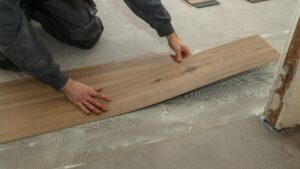
The subfloor is often a structural component in homes that people tend to forget about. It lays between the joists and your final flooring, taking on foot traffic, the weight of furniture and changes in moisture daily. If low quality plywood is used here it can bend over time leading to tiles breaking and wooden floors moving up and down. Good quality plywood with the right thickness and resistance to moisture can maintain stability for many years without any issues.
Inside Kitchen Cabinet Boxes
All people see the cabinet doors and handles. No one pays attention to the box itself. However, it is actually the cabinet box that decides how long your kitchen can last. The hinges are held by it, the shelves supported by it and everything stored inside is bearing its weight. If this space is made of lower quality plywood near the sink area, then swelling can occur. It also struggles to keep screws in place and eventually sags over time. A cabinet box constructed from good-quality plywood remains stiff and firm for a long period of time.
The Back Panels of Wardrobes and Shelving Units
Back panels, many times, are considered as less important. They usually are thin and inexpensive with very little fastening. However, the back panel of the wardrobe has more functions than just closing the rear part. It maintains the whole unit in a square shape. If there is no strong back, wardrobes become unsteady and tilt with time. Using good plywood here can give much stability to furniture that stands alone, even if it’s not very thick and stops the slow turning that causes doors to not close correctly anymore.
Staircase Risers and Treads
Stairs receive more damage compared to nearly any other area within a structure. Each step gives a little under the weight, this happening countless times as years go by. If the plywood core beneath the step surface is of inferior quality or not well glued, it starts to make noise and bend visibly. Good quality plywood, having strong cross grain construction, stays away from such movement and maintains staircases solid and silent. This is very important in homes as well as business places.
False Ceilings and Partition Frames
Walls for dividing spaces and false ceilings are usually structured with wood, then covered. What is placed within that framework like the bracing or backing sheets often becomes unseen once the final coat is applied. Inexpensive plywood used as a back support generally absorbs moisture and changes shape, which in time leads to cracks on the surface finish. Good plywood maintains its form, stays flat on the surface and provides painters and plasterers a steady ground to perform their tasks.
Furniture Drawer Bases
Open any drawer and tap the base. In budget furniture, it flexes. That flex is not just annoying, and it means the joint between the base and the drawer sides is under constant stress. As time passes, the base lowers, things fall through spaces and the entire drawer becomes untrustworthy. A drawer bottom made from high-quality plywood remains straight, fits well with sides without gaps or movement and can hold daily weight efficiently.
Behind Wall Cladding and Panelling
Walls with timber panelling or stone cladding require a sturdy base to hold them. The plywood sheet attached to the wall prior to applying the cladding is completely hidden when everything is finished. However, this unseen element secures every fixing point, adhesive connection and decorative layer in their positions. If the plywood used here is not of good quality, it can cause panels to become loose, adhesives may fail and surfaces might gradually bubble or fall off over time.
It is in the unseen places where the quality of materials really counts. Correctly choosing plywood for these hidden areas isn’t about just paying more money. It’s to ensure that everything on display remains as it should be, maintaining its intended appearance.