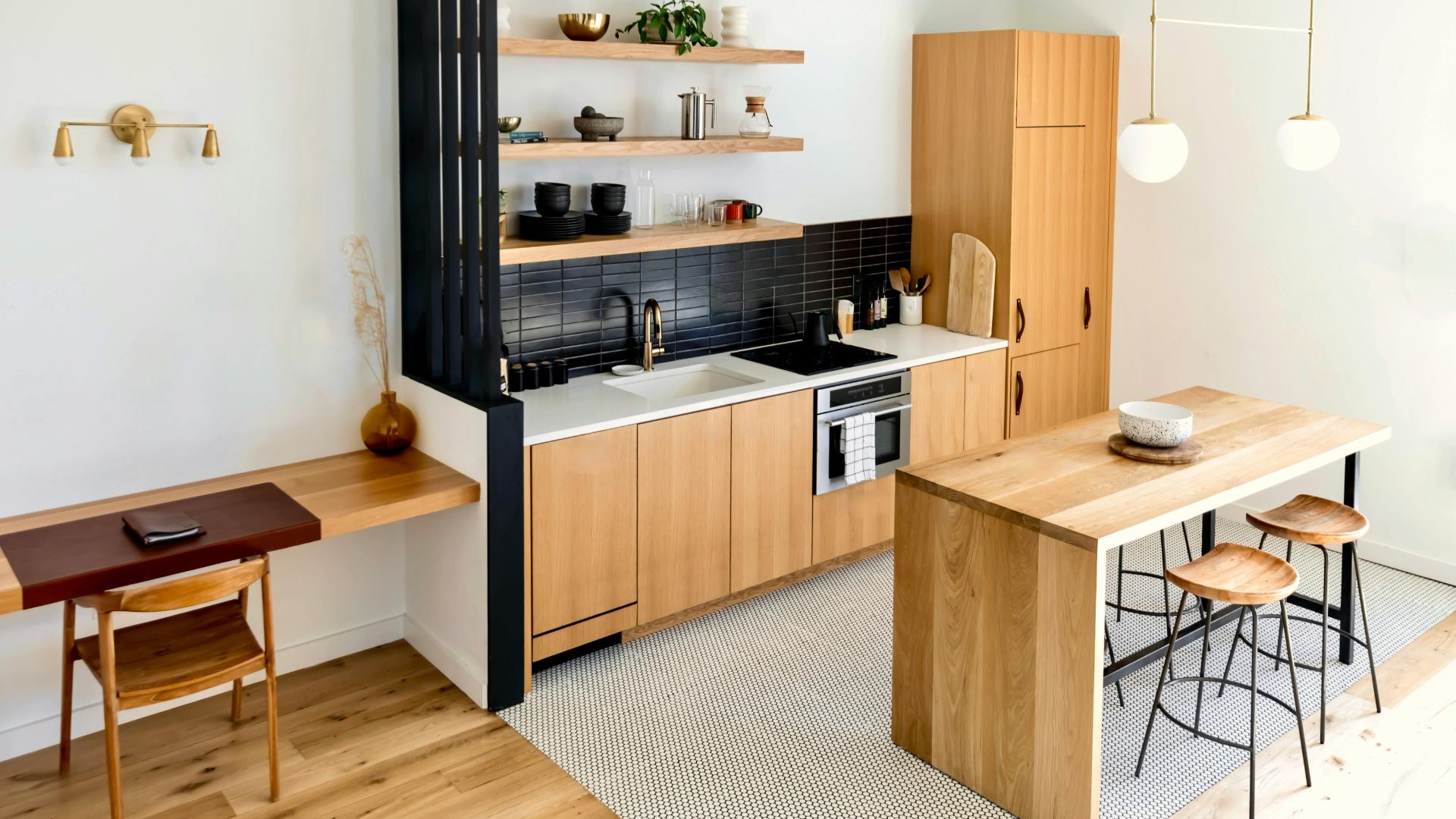
The Indian kitchen is not like kitchens in many other countries. It’s a hotter steamer and also used more often. From pressure cookers to daily washing come on timidity an Indian kitchen puts maximum stress on the furniture. That’s the only reason why choosing the right plywood for your kitchen is not just important, it’s very critical. One wrong decision can lead to swelling laminates peeling and complete cabinet failure within just a few years.
Kitchens need special plywood
You might think plywood is just plywood. But normal plywood simply cannot handle the environment for long. Kitchen plywood must survive heat, water and moisture together not separately.
But kitchens are different from bedrooms or living rooms.
A kitchen faces:
- Continuous steam from cooking
- Heat from gas stoves and chimneys
- Water spills near sink areas
- Daily wet mopping
- Oil vapours settling on surfaces
- Seasonal humidity changes
Indian climate makes the problem bigger
India has one of the toughest climates for wooden furniture. Depending on the location homes experience high humidity, long monsoon seasons, extreme summer heat and sudden temperature changes.
The Biggest Enemy: Moisture
Water damage doesn’t happen in one day.
It happens slowly.
Moisture enters plywood through:
- Sink area splashes
- Cleaning water on cabinet base
- Steam rising from cooking
- Screw holes and joints
- Edges not properly sealed
Once moisture enters poor-quality plywood, it gets trapped inside.
And trapped moisture leads to:
- Bubble formation
- Delamination (layers separating)
- Permanent swelling
- Weak structure
Commercial or MR plywood is designed for:
- Bedrooms
- Wardrobes
- TV units
- Dry indoor areas
It is moisture resistant, not waterproof.
When used in kitchens, MR plywood:
- Absorbs water slowly
- Glue weakens with heat
- Layers start separating
- Cabinets swell from bottom
Thickness matters more than you think
kitchen cabinets carry heavy loads utensils and groceries so thickness matters
Recommended thickness for kitchen plywood:
- 18 mm – carcass and vertical panels
- 16–18 mm – shutters
- 12 mm – back panels
Using thinner plywood may reduce cost but leads to:
- Sagging cabinets
- Weak screw holding
- Reduced lifespan
Why Edge Sealing Is Crucial
Even the best plywood can fail if edges are left open.
Moisture usually enters from:
- Cut edges
- Screw holes
- Unsealed joints
Good kitchen installation must include:
- Edge banding
- Sealant near sink
- Proper laminate pasting
- Silicone sealing at joints
Plywood quality and workmanship must go together.
What About MDF or Particle Board in Kitchens?
Many modular kitchens use MDF or particle board.
These materials:
- Look smooth
- Are cheaper
- Work well in dry climates
But in Indian conditions:
- MDF swells instantly with water
- Particle board crumbles near moisture
Ventilation plays a very important role
Even the best plywood will suffer if ventilation is for.
Ensure:
- Good chimney installation
- Regular exhaust use
- Windows or cross-ventilation
Less trapped steam = longer plywood life.
Real life use cases
| Material Used | Average Life |
| Commercial plywood | 3–5 years |
| MR plywood | 5–7 years |
| BWP plywood | 20–25 years |
| Poor MDF / board | 2–4 years |
How to Identify Good Kitchen Plywood
Before approving material, always check:
- BWP grade clearly mentioned
- ISI 710 certification
- Factory termite treatment
- Proper warranty card
- Brand reputation
Never accept verbal assurance alone.
Ask to see the stamp on the plywood sheet.
So in short you can say that as the Indian kitchen works hard every single day it handles heat, steam , water , oil and humidity. In kitchen shortcuts are always expensive because when kitchen plywood fails it doesn’t fall quietly it disrupts your entire home
