
When an old cupboard breaks or a kitchen is renovated most Indian homeowners face the same questions: what do we do with all this plywood? Some pieces are reused in store rooms and most end up dumped or quietly forgotten. With sustainability becoming a serious topic you might ask can plywood be also recycled?
What exactly is plywood made of?
Before talking about recycling you need to understand what plywood is made of.
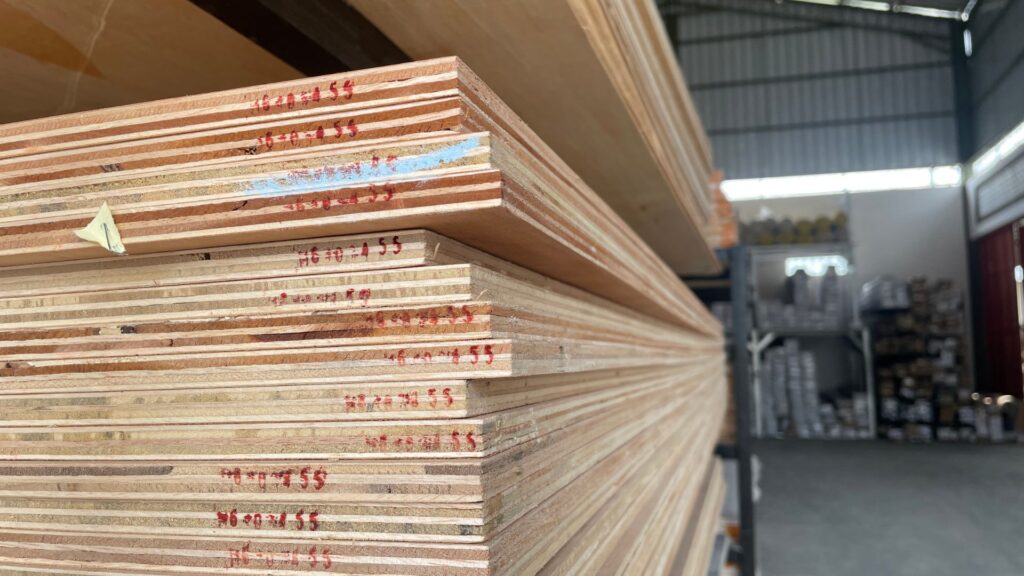
A plywood sheet is not just wood.
It includes:
- Thin layers of wood veneer
- Strong synthetic adhesives
- Chemical treatments (termite, moisture, fire)
- Surface laminates or veneers
Once all these are bonded together under heat and pressure, plywood becomes extremely durable , but also extremely difficult to separate.
That strength is exactly what makes recycling complicated.
Can Plywood Be Recycled Like Paper or Plastic?
Short answer: No.
Paper can be pulped.
Plastic can be melted.
Metal can be reshaped.
Plywood cannot be easily broken back into wood.
Why?
Because:
- Veneers are permanently glued
- Adhesives don’t dissolve easily
- Chemical treatments interfere with reuse
- Laminates cannot be separated
What happens to plywood in India?
Carpenters often reuse old plywood for temporary shelves and workshop tablets. This is not recycling its reuse. You can even sell it to scrap dealers but they do not recycle it either they use it very much, selling them into usable parts or burning unusable scraps. Burning treated plywood releases toxic fumes which is unsafe and also harmful. Large amounts of plywood waste go directly to landfills mixed with tables. Once buried, plywood might take decades to decompose because of chemical opening.
Why is plywood recycling difficult in India?
Modern plywood uses phenol-based resins that do not break down easily. The glues are designed to last at least 25 to 30 years not to be recycled. A single plywood board might contain hardwood softwood and chemicals. India does not yet have dedicated recycling plants or segregation at source.
What is being done currently?
Some progress does exist. Particle board from wood waste certain manufacturers use wood to produce particle board and chip board, but only clean wood waste is usable and laminated plywood is mostly rejected. So only a small part of the waste enters this cycle.
The Ideal Future: What Recycling Should Look Like
In an ideal system, plywood recycling would involve:
- Separate collection of wood waste
- Removal of laminates mechanically
- Controlled crushing into chips
- Safe treatment of adhesives
- Reuse in engineered boards
Countries like Germany and Japan already follow partial versions of this model.
India is still at a very early stage.
The Role of Manufacturers in the Future
Future-ready plywood companies are now exploring:
- Low-emission adhesives
- Bio-based resins
- Easily separable board structures
- Take-back programs for old furniture
Current Reality vs Ideal Future
| Aspect | Today | Ideal Future |
| Recycling facilities | Very limited | Nationwide systems |
| Collection method | Informal | Organised |
| Reuse | Unplanned | Structured |
| Burning waste | Common | Eliminated |
| Recycling rate | Very low | High |
| Awareness | Limited | Strong |
So you can just say that plywood can be recycled only partially with many limitations. Tomorrow yes in the future with the right systems and technology awareness plywood can be recycled. Until full recycling becomes possible the most responsible choice is simple use quality plywood and make furniture that lasts. Because the greenest furniture is not the one that is recycled it is the one that never needs to be replaced in the first place.